A dress can look perfect on a platform and feel entirely different on gravel, grass, a narrow staircase, or a crowded dance floor. The setting is useful information, not a rulebook. Start with what your venue asks your body to do, then choose the shape that lets you move through it.
Start with the route, not the photographs
Imagine the full route from getting ready to the last dance. Will you climb exterior steps, cross a lawn, sit through a long dinner, or move between several rooms? Ask the venue about the ceremony surface and any change of location. A gown that feels effortless in a fitting room may need bustling, lifting, or a second pair of hands once you are outdoors.
Take a few ordinary movements seriously during appointments: sit in a chair, raise both arms, take a long step, turn, and bend enough to pick up a dropped place card. If a dress only works while standing still, decide whether the visual impact is worth that tradeoff. There is no correct answer, but there should be a deliberate one.
| Setting | Shape to try | Practical question |
|---|---|---|
| Formal ballroom | Ball gown or structured A-line | Can the skirt clear tables and narrow aisles? |
| Garden or vineyard | Soft A-line or column | How will the hem handle grass and paths? |
| Beach or warm destination | Light sheath or fluid A-line | Does the fabric breathe and move in wind? |
| City hall or restaurant | Column, tailored midi, or compact A-line | Can you sit, walk, and enter a car easily? |
What the main silhouettes actually do
A-line: adaptable volume
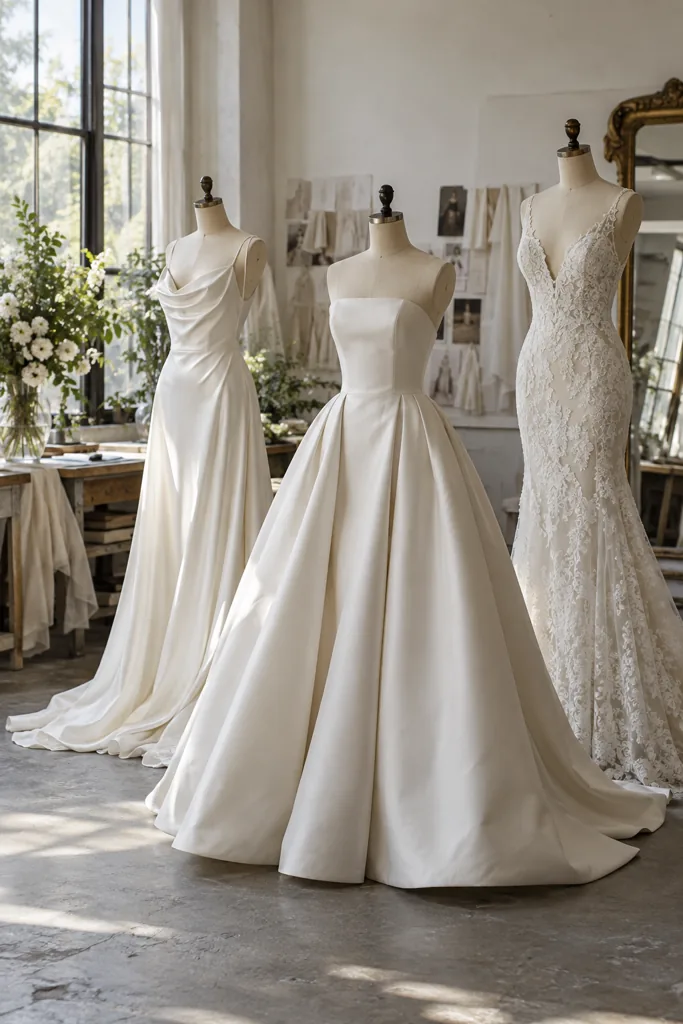
An A-line skims the waist and widens gradually. It can read romantic in tulle, tailored in satin, or quietly modern in crepe. Because its volume varies, ask to see the dress from the side and while seated. An A-line with a long train still needs a plan for stairs and outdoor photos.
Ball gown: presence with a footprint
A full skirt suits a room with generous circulation and a ceremony space where you want scale. Try walking beside another person rather than alone: doorways, cocktail tables, and tightly placed chairs reveal more than a mirror. Consider how the train will be secured before dinner.
Sheath and column: clean lines, honest fit
These shapes bring attention to cut and fabric. They can be lovely for a small ceremony, contemporary interior, or destination event. A narrow hem or fitted hip can limit stride length; test it in your actual shoes. If the ceremony includes kneeling or a steep stair, ask the tailor what alterations can add ease without changing the line.
Mermaid and trumpet: movement matters
A mermaid usually fits closely farther down the thigh or knee; a trumpet begins to flare higher. Labels vary by designer, so assess the real seam placement. Walk at a normal pace and sit for several minutes. If a dramatic shape appeals to you but feels restrictive, try a removable overskirt or a less fitted trumpet.
Match fabric and construction to conditions
Silhouette is only one part of the decision. A lightweight tulle skirt behaves differently from a heavily beaded one, even when both are called A-line. A crisp mikado skirt holds its outline; a soft chiffon layer follows the wind. For deeper comparisons, read our seasonal fabric guide.
For outdoor events, ask what will touch the ground: a removable train, a narrow hem, or several layers of delicate tulle. For a hot venue, consider lining and structure as well as the outer fabric. For a cold ceremony, an intentional layer may be more comfortable than hoping the reception room is warm.
Bring your real venue information to the fitting
- Show a photo of the ceremony and reception spaces, including the floor or terrain.
- Bring shoes at the approximate height you will wear.
- Tell the stylist about transportation, stairs, weather, and the length of time you expect to remain in the dress.
- Ask what can be altered and what should remain as designed.
- Photograph the gown from front, back, and in motion, if the salon permits it.
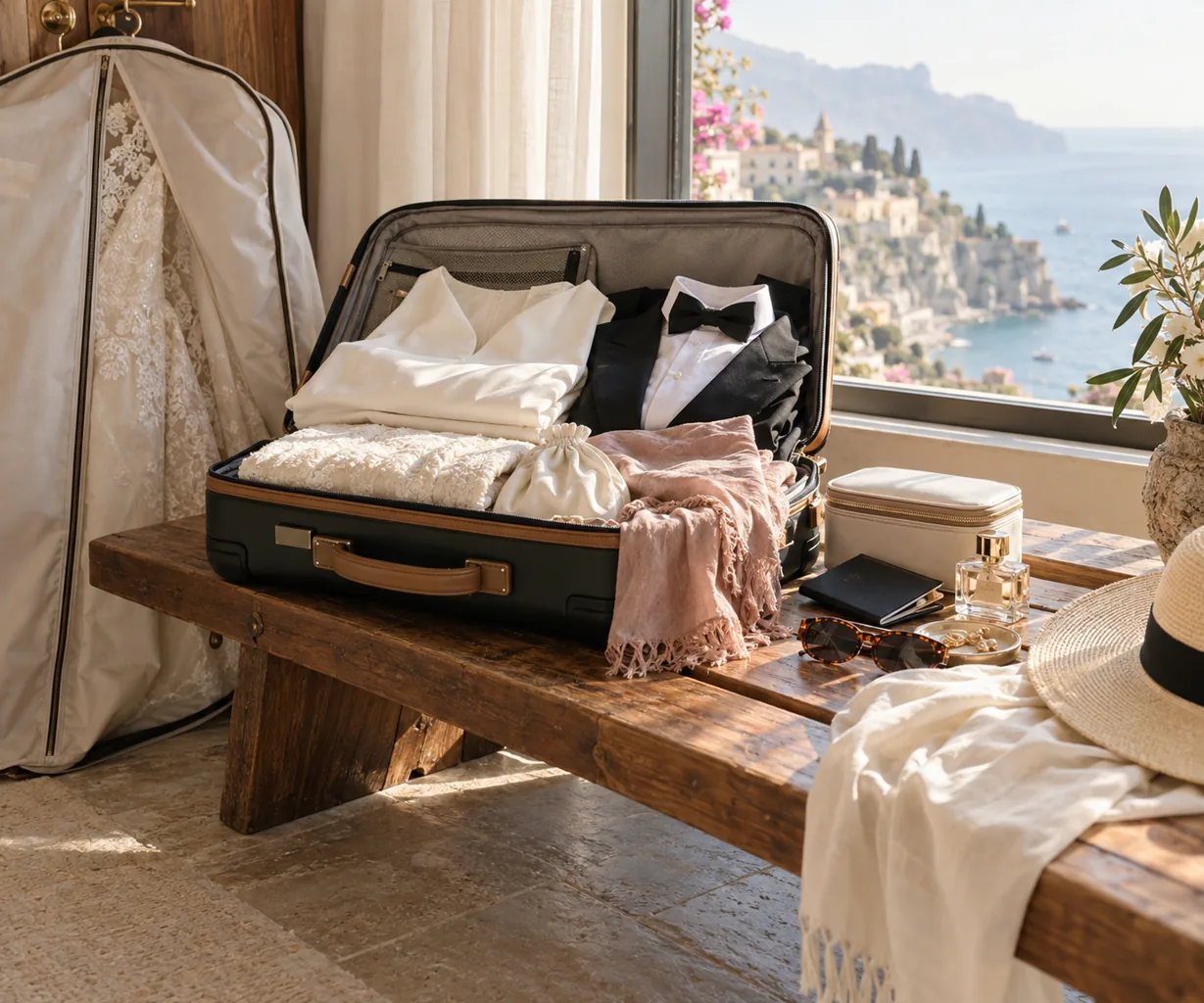
If you are getting married at a destination, talk through how the gown will travel before committing to a very large skirt or fragile embellishment. Our wedding weekend packing plan helps turn that question into a checklist.
Make the choice your own
A garden wedding does not require a bohemian dress, and a ballroom does not require a ball gown. Contrast can be beautiful: a clean column against ornate architecture or a full skirt in a simple courtyard. The useful test is whether the dress makes you feel present and lets you do what matters. Choose the silhouette, then make a practical plan for the hem, the bustle, and the route.
Questions to settle before you order
Ask whether the displayed sample is your size or has been clipped. A clipped bodice can change the position of a waist seam and the way the skirt begins to fall. Confirm the ordering timeline, alteration schedule, and what adjustments the salon expects to be possible. If your venue has a firm ceremony time, schedule fittings with enough room for a final try-on in your wedding shoes. Ask who will show a trusted person how to bustle the dress and take a short video with permission.
A long train may be exactly what you want for the ceremony, even when the reception room is compact. One solution is to make the train a planned feature for a defined part of the day. Decide when it will be lifted or bustled, where photos happen, and how the dress will move at dinner. That preserves the choice instead of letting a practical concern silently decide it for you.
What if you love a dress that conflicts with the space?
Identify the actual conflict. Grass can be addressed with an aisle runner or a hem plan; a narrow stair may need a helper; a hot room may require a change of layers. Some issues have simple solutions, while others would alter how you experience most of the day. Cost those solutions in time and attention as well as money. The aim is not to eliminate inconvenience, but to choose the inconveniences you are happy to accept.
A final decision exercise
If two gowns remain in contention, write down what each one gives you and what it asks from you. One might feel effortless but look quieter in pictures; the other might make a memorable entrance but need a helper at every doorway. Describe the tradeoffs without calling either gown the practical or romantic option. Both choices can hold both qualities.
Return to the feeling you want at the ceremony and the activities you most want to enjoy afterward. If you care about moving freely among guests, a dress that lets you cross the room without planning may be worth more than an extra layer of volume. If you have always wanted a sweeping train, choose it and give the bustle a real rehearsal. A plan makes room for delight.
Take one day away from appointment photos before deciding. Show them to only the people whose judgment helps you feel clearer. Too many opinions can turn a personal decision into a vote. Your own ease, when you put the dress back on, is useful evidence.