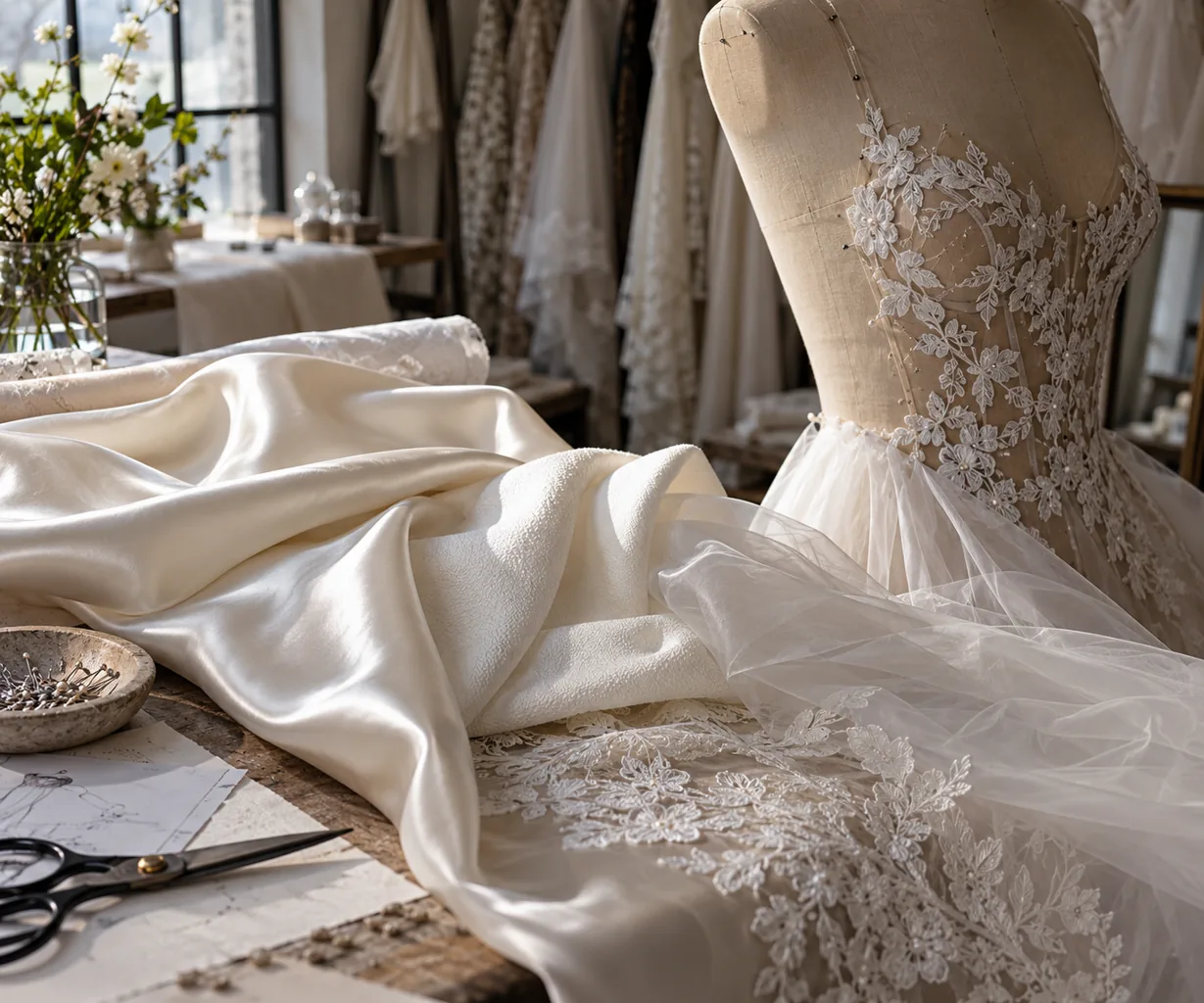
Fabric is the part of a dress you feel all day. It determines whether a skirt holds a sculptural curve, falls in a soft line, or catches a breeze. Season matters, but so do the venue temperature, lining, and how long you will wear the gown.
First, separate surface from structure
A fabric name alone cannot tell you whether a dress will feel cool or heavy. A silk dress may have a substantial lining; a sheer lace gown may depend on layers underneath. Ask about the full construction: outer fabric, lining, boning, petticoat, and embellishment. Lift the skirt gently with a stylist's permission. Its weight will tell you more than a product description.
Crepe
Smooth, fluid, and often softly structured. It reveals the cut and can make a clean column feel especially modern. Ask about lining and wrinkling in the particular gown.
Chiffon
Airy and mobile, often layered for softness. It moves beautifully outdoors but can catch in wind and may need careful hem management.
Mikado
Substantial, crisp, and suited to defined pleats or architectural skirts. The shape can feel formal without heavy beading.
Organza
Sheer with more body than chiffon. It can create volume with a lighter visual effect, though layered construction still adds weight.
Satin
A weave with a smooth, reflective face rather than one specific fiber. Ask whether it is silk or synthetic and notice how it handles light.
Lace
Ranges from delicate floral motifs to bold graphic patterns. Placement, backing, and beading change both comfort and appearance.
Spring: plan for changeable conditions
A spring wedding can begin cool and end warm, especially when the ceremony and reception happen in different places. Crepe, lighter satin, or layered organza can work across many settings. Consider a removable topper or tailored jacket if you will spend time outside. See how the fabric looks in overcast light as well as strong sun; high sheen can appear quite different in photographs.
For a garden ceremony, examine how the skirt brushes the ground. A delicate overlay may collect grass or moisture. If you love it, arrange a clear aisle and choose a bustle that a friend can learn to fasten.
Summer: prioritize the entire garment
Warm-weather shopping often focuses on a light outer fabric. The lining and internal structure matter just as much. A dress with many synthetic layers may feel warmer than a simple gown in a heavier-looking cloth. Test how the garment feels after sitting for ten minutes, not just after the first turn in front of the mirror.
For breezy coastal locations, a very light skirt may need discreet weights or a more secure underlayer. Keep movement in mind: a loose sleeve may be comfortable indoors but hard to manage in wind. Our venue and silhouette guide offers a second lens for the same decision.
Fall: texture has room to speak
Autumn light pairs well with textured lace, matte crepe, or crisp satin. For an outdoor portion of the day, build the layer into the look: a cape, coat, or long-sleeve topper can feel intentional. Try the layer over the actual dress before buying it. Necklines, shoulder seams, and trains can compete in ways that are hard to predict on separate hangers.
Winter: warmth without unnecessary weight
Heavier materials such as mikado or duchess satin can hold a striking line in a winter venue. Yet a warm ceremony room may make a very structured, multilayered gown uncomfortable by dinner. Ask how easily you can remove a layer, and plan outerwear for transit between locations rather than relying on the dress to keep you warm outside.
Care, travel, and last looks
Some fabrics show creases readily; others attract lint or catch on jewelry. Ask the salon how the dress should be transported, steamed, stored, and handled if a seam or hook needs attention. For a destination wedding, speak with your carrier about garment transport before assuming an onboard closet is available. Our destination packing guide covers a simple travel plan.
Choose by touch as well as sight. A beautiful cloth that feels wrong against your skin can distract you at the exact moment you want to be fully there. A sample swatch is helpful, but the finished gown is the final test.
Three fabric tests to do in the salon
First, stand by a window and check opacity. White and ivory fabrics can shift noticeably between warm showroom lighting and daylight; lining can create a visible edge at the hem or bodice. Second, sit for a while and stand again. Notice where creases form and whether they soften when you move. Third, brush a sample of your intended accessories gently near the fabric, with the stylist's guidance, to see whether beading, prongs, or a rough shoe surface might catch it.
Ask how the fabric responds to cleaning and water. A mark that seems small on a dark outfit may be conspicuous on a pale gown, while aggressive spot treatment may make matters worse. Follow the maker's care advice rather than an untested internet trick. If your ceremony is outdoors, discuss the difference between a damp lawn and a dry floor. These details rarely determine the whole choice, but they help you plan the right protection.
Does season dictate color?
No. Color can be chosen for your skin tone, personal taste, and the quality of light at the venue. Ivory, bright white, blush, and warmer champagne shades each behave differently against skin and in photographs. Try samples near your face in daylight if possible, and compare them against your accessories. A fabric you love is more persuasive than a seasonal rule borrowed from a mood board.
How to compare two gowns fairly
Try to compare the full garments under similar conditions. A bright showroom spotlight can flatter a shiny fabric while a matte one comes alive near daylight. Photograph both in similar positions, wearing the same shoes or heel height. Notice how each hangs after you have walked and sat, and how the lining feels against your skin.
Ask whether the displayed fabric is identical to the version you will order. Colorways, lining choices, and additional appliqués can change opacity and weight. Request a written summary of the selected materials when ordering. If a dress requires a particular undergarment, try it before deciding how the fabric really behaves.
Finally, remember the budget for care and alterations. A fragile overlay may need more careful handling, and intricate beading can affect alteration options. These costs do not make a fabric a poor choice; they simply belong in the same decision as color, movement, and texture.
Also check the dress at the time of day closest to your ceremony if the salon can accommodate it. Fabric can appear quite different under low winter light, bright midday sun, or warm evening lamps. Bring the same accessory ideas into that comparison so the final look is chosen as a whole.