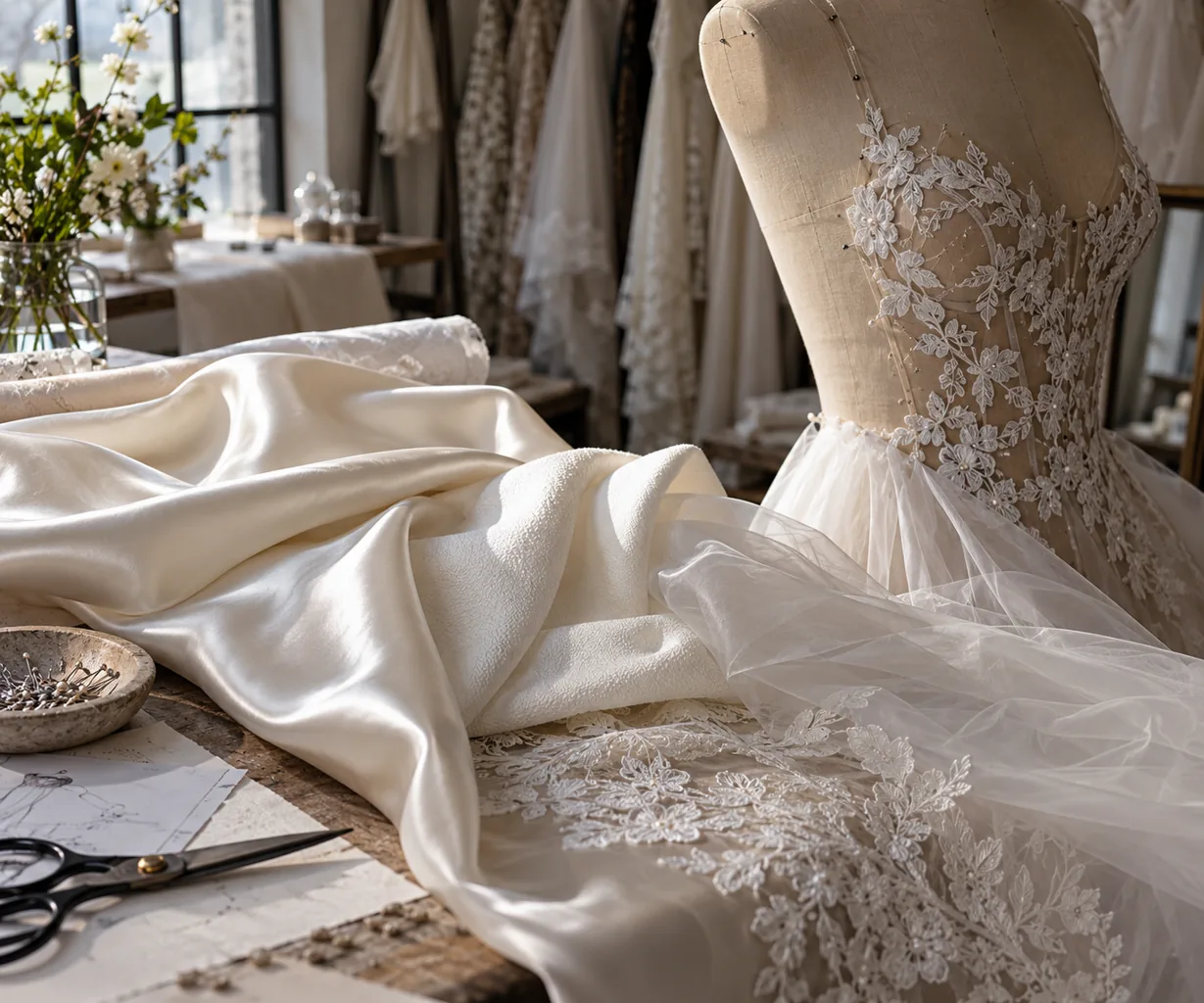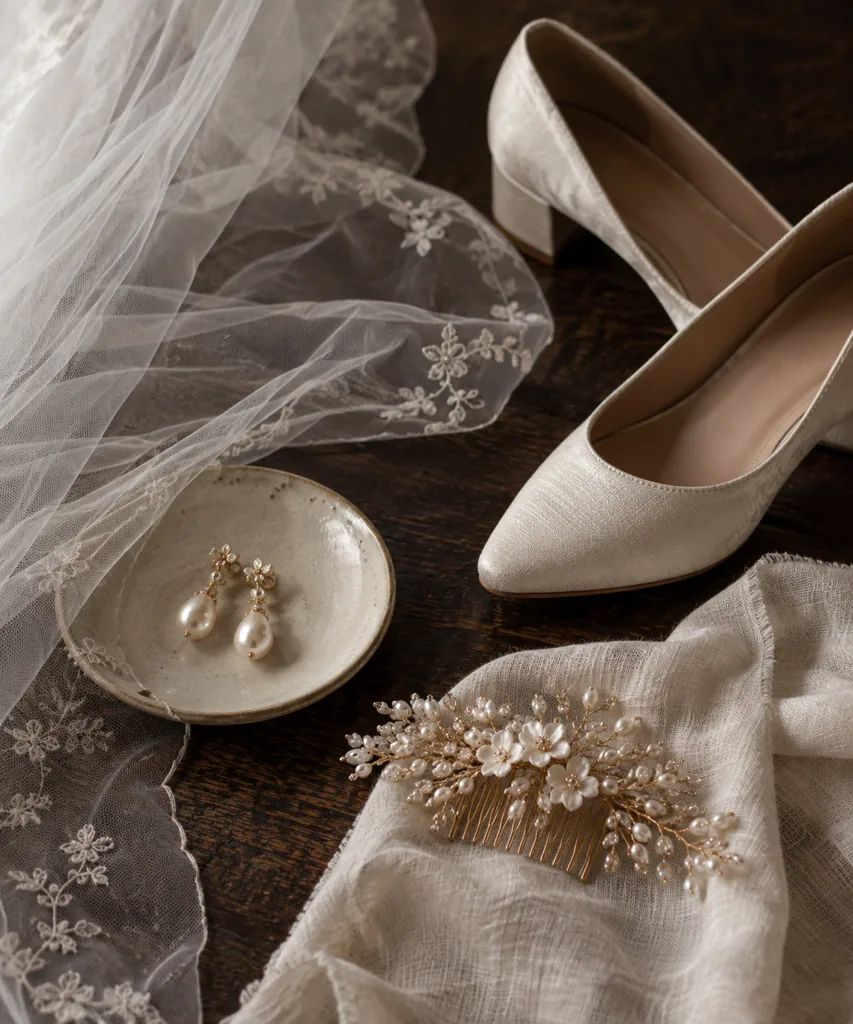
Accessories do more than add sparkle. They change where the eye lands, how a dress moves, and how comfortable you feel after hours on your feet. The strongest finishing choices often start with one question: what is the dress already saying?
Choose a focal point
Put on the dress and look at it without anything added. Is the neckline the most interesting part? The back? The fabric's clean surface? Build around that feature. A high embellished neckline might call for earrings and no necklace; a minimal column can carry a sculptural veil. Too many focal points can make the outfit feel busy, though maximalism can be intentional if the pieces share a visual rhythm.
Photograph each option from the same distance and in similar light. Close-up mirrors make tiny pieces look more important than they do across a room. A full-length image often reveals the balance immediately.
The veil changes the silhouette
A short veil can bring softness to a tailored look without covering the entire gown. A longer veil extends the line and can make a simple dress feel ceremonial. Try it with the hairstyle you are considering and walk a few steps. Ask how it attaches and who will remove or adjust it before dinner. Outdoor wind deserves a real test, not a hopeful guess.
If the gown has a detailed back, check whether the veil obscures it in the photos you most want. Sometimes a sheer, unfussy veil is the answer; sometimes no veil is better.
Jewelry should work with movement
Choose earrings according to neckline, hairstyle, and comfort. A pair can look delicate in a jewelry box and feel heavy after an hour. Try them for longer than a minute. If a necklace competes with embroidery, remove it and compare. Metal tone can echo a detail in the dress, but exact matching is not required.
For heirlooms, plan around the piece early. A family bracelet or pendant can become the anchor of the look, and a tailor or jeweler may help with a practical repair well before the wedding week.
Shoes are part of the route
Think about the ceremony surface and the walk between spaces. A slim heel may sink into soft ground. A beautiful new shoe may become distracting by the first dance. Break in your chosen pair gently and bring them to alterations so the hem is set correctly. If you plan a second pair, check whether the changed height makes the dress drag.
For more on matching the garment to stairs, grass, and room size, see our venue-based silhouette guide.
| If your dress has… | Try first | Check for |
|---|---|---|
| Detailed neckline | Simple earrings | Jewelry covering the detail |
| Open back | Sheer or shorter veil | Back detail disappearing |
| Clean satin surface | Textured veil or statement earring | Competing focal points |
| Outdoor ceremony | Secure hair detail and stable shoes | Wind and uneven ground |
Layers, hair details, and a final rehearsal
A jacket, wrap, cape, or removable sleeve can shift a ceremony outfit into a different evening look. Try it over the finished dress and practice taking it off. Hair combs and pins should be tested with your actual hairstyle; a heavy piece may slip in fine hair, while a small piece can disappear in fuller styling.
At a final fitting, put on the whole look: underlayers, shoes, veil, jewelry, and outerwear. Sit, walk, raise your arms, and ask someone to photograph the result from several angles. Pack each small piece in a labeled pouch and designate one person to know where it lives. Our weekend packing guide can help if the accessories will travel.
Then edit once. Keep the pieces that let you feel like yourself in the room, rather than like someone playing the part of a bride.
Make a mood shift with one change
A ceremony veil removed for a sleek hair comb can change the entire silhouette without a second dress. A soft wrap replaced by a structured jacket can move an outfit from romantic to sharp. If you want two looks, begin with the simplest transition that fits your schedule. Test the change with the person who will help you, including where the removed item will be stored.
Scale is the quiet variable. Tiny studs can disappear beneath a wide hairstyle; very large earrings can dominate a delicate neckline. Hold each option at the position it will actually be worn and step back several feet. Examine the result in natural light, which often tells a different story from a bright fitting-room mirror.
Think past the ceremony photograph
Will the earrings snag when someone hugs you? Can you dance in the shoes? Will a bracelet catch a sleeve? These are small questions with outsized influence over comfort. Pack backs for earrings and a safe container for anything you remove. If a sentimental accessory is fragile, use it for portraits or the ceremony and give it a planned place afterward.
The dress and accessories should make the same person visible. A trend can offer a useful idea, but it does not need to become an obligation. Trust the version of the look that feels settled once you stop adding pieces.
When to buy each piece
Wait to choose pieces that depend on the finished neckline or hem until those details are settled. You can collect ideas early, but buying a necklace before the dress can create unnecessary pressure to make them match. Bring any sentimental jewelry to a fitting so you can see its real scale and tone against the fabric.
Order shoes early enough to wear them for alterations and to test them at home on a clean surface. Check return policies before trying them outdoors. Hair accessories can wait until the hairstyle direction is clear, although a veil may influence that decision. If the look involves a removable layer, photograph it both on and off with the bustle secured.
Keep a final list of who handles each piece on the day. A veil removed before dinner, a jacket left in the preparation room, and a second pair of shoes can easily end up in three different places. A small labeled bag and one agreed handoff are far more useful than another beautiful box.
Keep a record of the final look
Take one photograph of every piece together at the final fitting: dress, shoes, jewelry, veil, underlayers, and any evening change. This is helpful for packing and for the person assisting you. Make a note of how delicate pieces fasten, which shoes correspond to the finished hem, and whether the veil needs a particular pin. A clear record prevents small mysteries on the morning of the wedding.
If a piece is borrowed, agree on how it will be returned before the celebration. Give it a protective pouch and designate one person to keep track of it when you change.